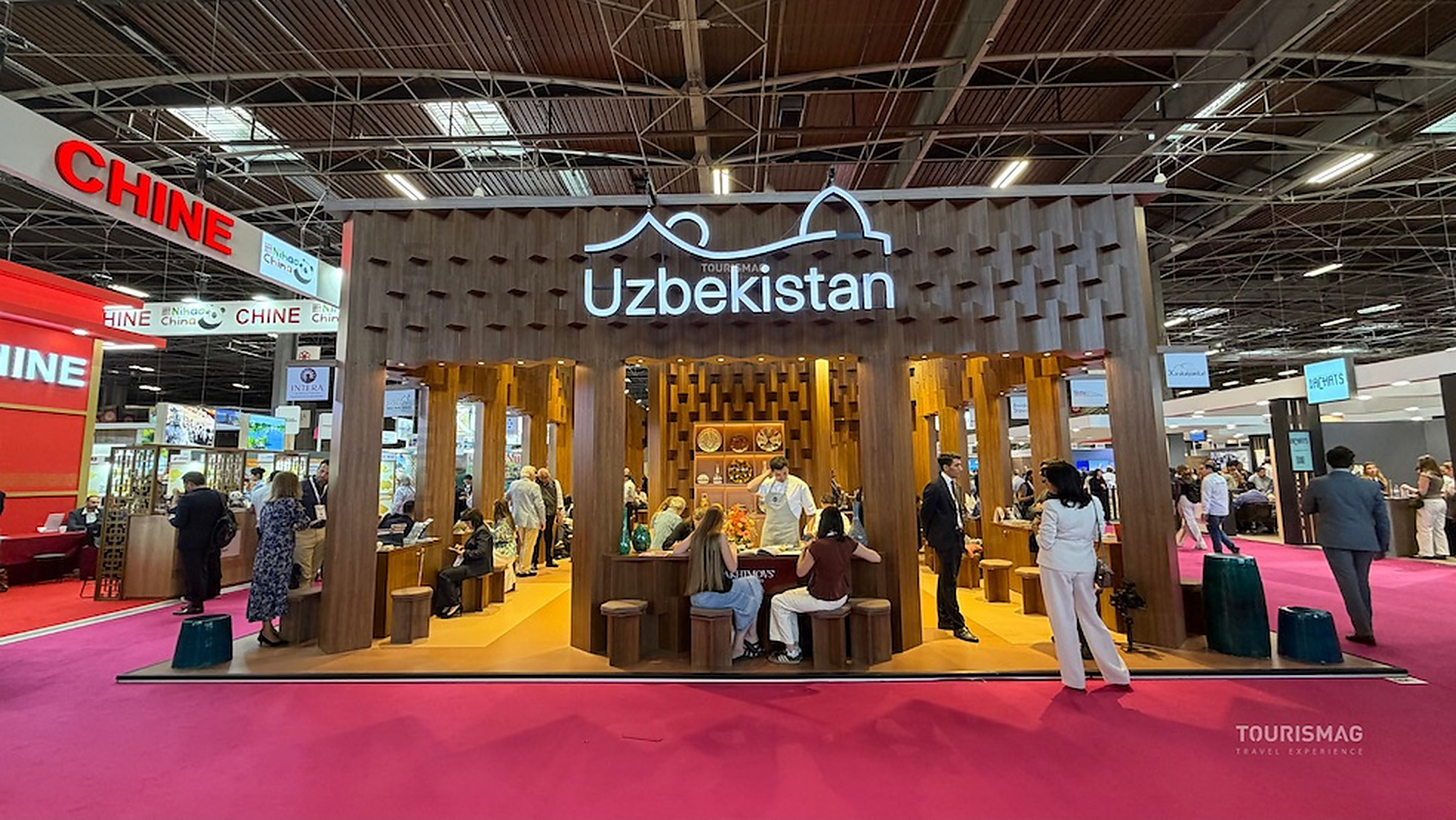

The Golden Globes are taking another step outside Hollywood with the launch of the Golden Globes Silk Road Tribute Gala, a new event dedicated to film and television talent from Central Asia and the Caucasus. The inaugural edition will take place in Uzbekistan on October 23 and 24, 2026, bringing the Golden Globes brand to the historic Silk Road region for the first time.
Announced in Los Angeles on June 23, 2026, the event will honor artists from a region whose film and television industries remain less visible on the global stage, despite deep cultural traditions and a long history of storytelling. For the Golden Globes, the initiative extends a series of recent events that have brought the organization closer to regional film communities beyond the traditional centers of the international awards circuit.
A New Regional Move After Cairo and Jeddah
The Silk Road Tribute Gala follows a sequence that has already linked the Golden Globes to major cultural and cinematic destinations in the Arab world and the Red Sea region. In November 2024, the organization launched the Omar Sharif Award in Cairo, where Egyptian cinema icons Yousra and Hussein Fahmy received the inaugural distinction at the Nile Ritz-Carlton Hotel, during an event held on the sidelines of the 45th Cairo International Film Festival. Organized in collaboration with Enigma Magazine, the ceremony paid tribute to the legacy of Omar Sharif while also recognizing Egypt’s enduring place in Arab and international cinema.
One year later, the Golden Globes continued that outreach at the Red Sea International Film Festival in Jeddah. During the festival’s fifth edition, Tunisian actress Hend Sabry received the Golden Globes Omar Sharif Award, while Indian star Alia Bhatt was honored with the Golden Globes Horizon Award. The event underlined the growing role of regional festivals as meeting points between Hollywood institutions, Arab cinema, Asian stars and international industry guests.
Spotlight on Central Asia and the Caucasus
Uzbekistan now appears as the next stop in that expanding map. The move shifts attention toward Central Asia and the Caucasus, territories connected by history, migration, trade routes and cultural circulation, but still less present in mainstream international entertainment coverage. The choice of the Silk Road as the symbolic frame of the gala gives the event a strong identity, linking contemporary screen talent to one of the world’s most recognizable histories of exchange.
“As part of the Golden Globes’ ongoing commitment to honor artistic excellence, we remain focused on the craft that defines great storytelling,” said Helen Hoehne, President of the Golden Globes. “Central Asia and the Caucasus are home to rich creative traditions and compelling new voices. We are proud to recognize the artistry behind these stories and support the creators who bring them to life on a global stage.”
The Golden Globes Silk Road Tribute Gala will be produced and presented by Vivid Strategies in partnership with the Golden Globes and local partner Leto Productions. Orlando John will support the event’s creative development and talent relations management.
For filmmakers and television artists from Central Asia and the Caucasus, the announcement could create a new platform for recognition. The region’s cinema has long circulated through festivals, specialist circuits and co-production platforms; a Golden Globes-branded tribute gala may now bring those creative communities to a broader industry audience. At this stage, the event is still in its early announcement phase, with programming and honorees to be revealed later, but its stated ambition is clear: to recognize artists whose work has often struggled to reach wider audiences.
“This is a historic moment for the region,” said Giorgi Rtskhiladze, Co-Founder and Partner of Vivid Strategies. “For decades, filmmakers from Central Asia and the Caucasus have produced extraordinary work that has too often gone unseen by global audiences. This initiative opens new pathways for recognition, opportunity, and international collaboration. Our local partner, Leto Productions and I are looking forward to making this important initiative a reality.”
Uzbekistan, Cinema and the Silk Road Imagination
The tourism dimension is also part of the story, although cinema remains the main engine of the announcement. Recent Golden Globes regional events show how awards, festivals and cultural destinations can increasingly overlap. Cairo offered the setting of a major Arab film festival and the symbolic weight of Egyptian cinema. Jeddah, through the Red Sea International Film Festival, linked its cinema ambitions to Al-Balad, the city’s historic district and a UNESCO World Heritage site, where screenings, masterclasses, retrospectives and professional meetings turn the old city into a film hub during the festival.
Uzbekistan could offer a different but equally evocative frame. The Silk Road is one of the country’s strongest international references, associated with heritage, architecture, travel routes and the memory of cultural encounters between East and West. By hosting a Golden Globes-branded event, the country may benefit from a new form of cultural visibility, one that connects cinema and television to travel, heritage and the image of place. That potential should be read cautiously for now, but the location already gives the gala a clear cultural resonance.
When Awards Shape the Image of a Destination
This dynamic is not specific to Uzbekistan. Film festivals and awards events no longer function only as red-carpet showcases. They can also shape the way a city, a country or a region is seen by international audiences. Cannes, Venice, Toronto, Marrakech, Cairo, El Gouna and the Red Sea have all shown, in different ways, how cinema can help turn a destination into a cultural reference point. The Silk Road Tribute Gala brings that logic to Uzbekistan, not by replacing the cinematic focus of the event, but by placing it within a broader landscape of heritage, travel and international exchange.
The announcement fits into a wider shift in the entertainment industry, as Hollywood institutions increasingly engage with films, series and stars from multiple cultural centers. The Golden Globes’ recent initiatives in Cairo, Jeddah and now Uzbekistan suggest an effort to engage with that reality by building bridges with regional film communities and by associating the organization’s name with events that recognize local and transnational talent.
Founded in 1944, the Golden Globes are among the most prominent awards in film and television. Over the last three decades, the organization has enabled donations of more than 55 million dollars to entertainment-related charities, including scholarship programs, film restoration projects and humanitarian efforts. Dick Clark Productions is the owner and producer of the Golden Globes.