
WTTC members have committed $2 billion in new investment to Malta. Alongside a new roadmap for European tourism, the announcement raises a bigger question: how can destinations turn investment into lasting prosperity?
Tourism investment is a statement about the future of a destination. It shapes what gets built, which businesses grow and how communities experience the industry around them.
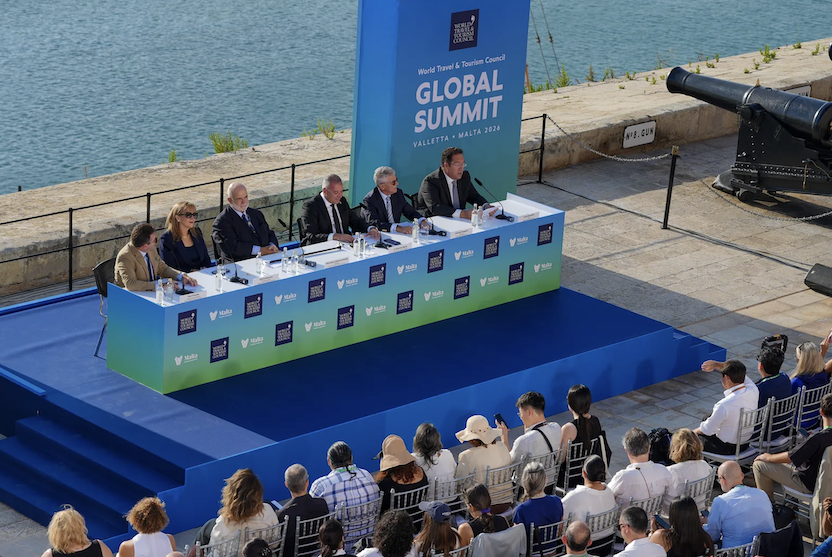
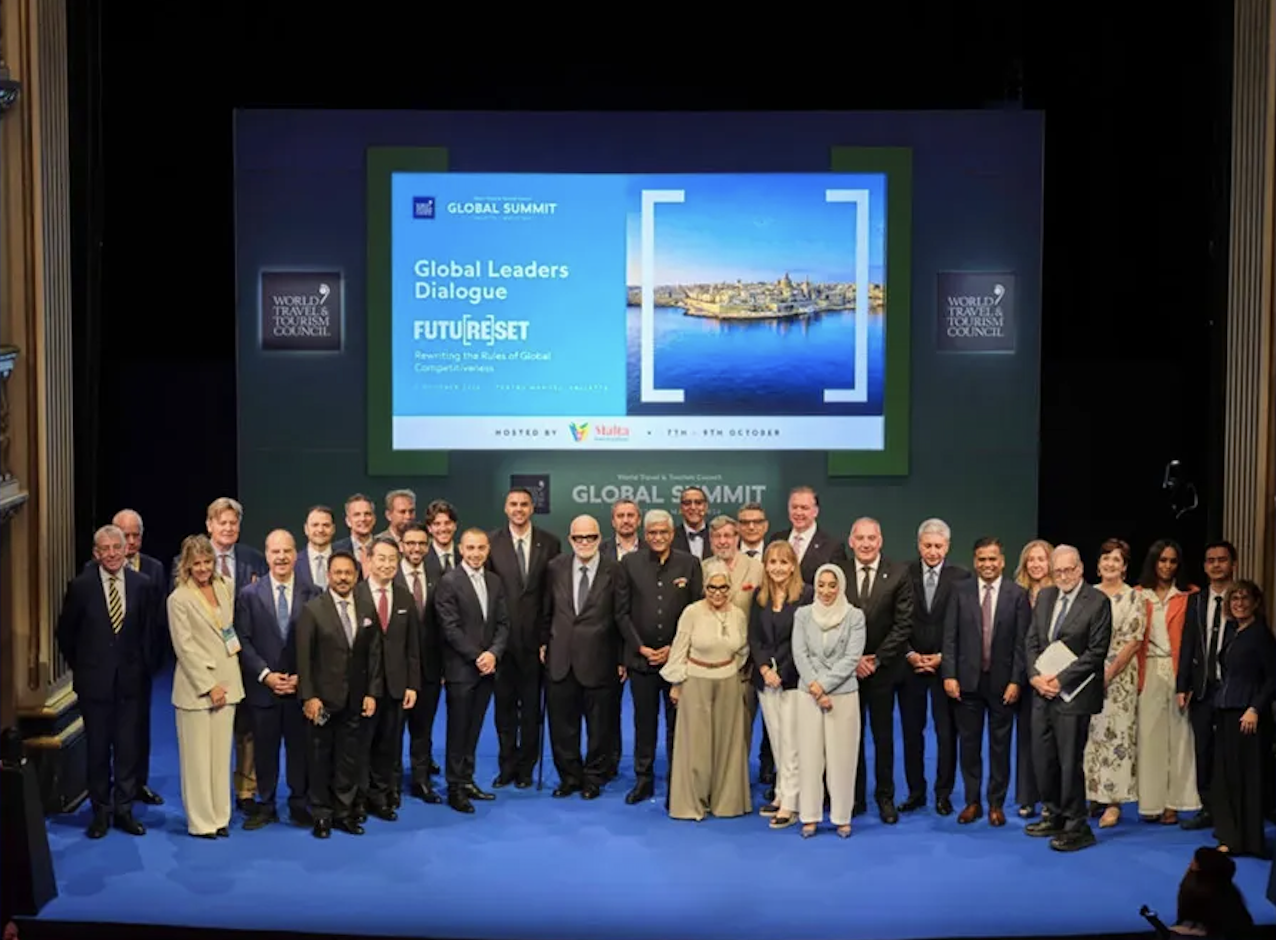
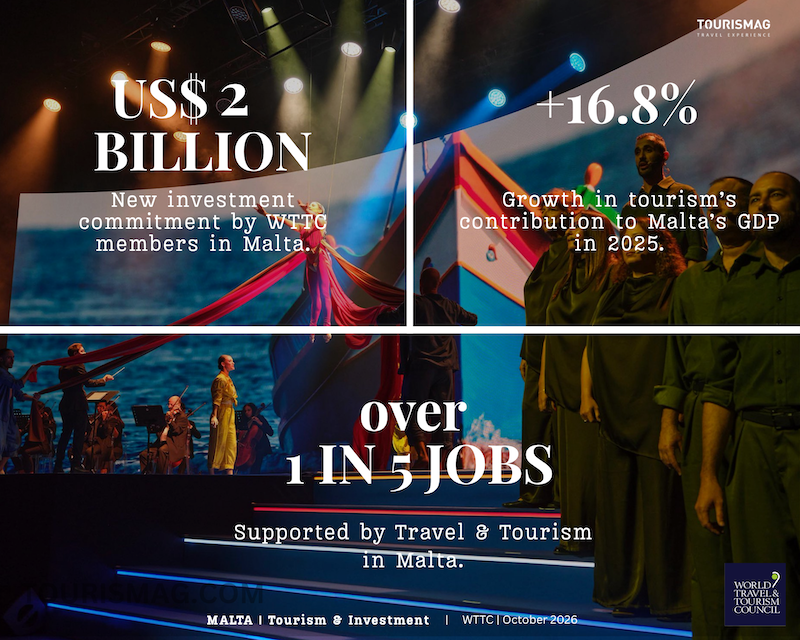
In Malta, that statement now carries a substantial figure. Following its Global Summit in Valletta, the World Travel & Tourism Council (WTTC) announced a collective $2 billion investment commitment from its members. The organisation presented the pledge as a vote of confidence in the government’s tourism vision and its cooperation with private enterprise.
The announcement signals ambition. Its significance will become clearer as individual projects take shape.
Our Members are putting capital behind their belief in the country’s potential,
said Gloria Guevara, President & CEO of WTTC.
Malta’s momentum attracts investor confidence
Malta enters this next phase from a strong position. According to WTTC, tourism’s contribution to the country’s GDP grew by 16.8% in 2025, compared with a 2.6% European average. In 2026, the sector is forecast to contribute $4.9 billion, representing 16.9% of national GDP, while supporting more than one in five jobs.
The investment commitment could support infrastructure, accommodation, connectivity and visitor experiences. However, the announcement does not identify individual investors, allocate funding to specific projects or provide a delivery timetable. The $2 billion figure represents a commitment, rather than completed investment.
For a destination where tourism carries such economic weight, project selection matters enormously. New capacity brings lasting value when the surrounding infrastructure, workforce and public services can support it.
Europe’s investment challenge goes beyond funding
Investment is fundamental to the future of our sector,
said Manfredi Lefebvre, Chairman of WTTC.
A separate WTTC report, released at the summit, puts Malta’s announcement into a wider context.
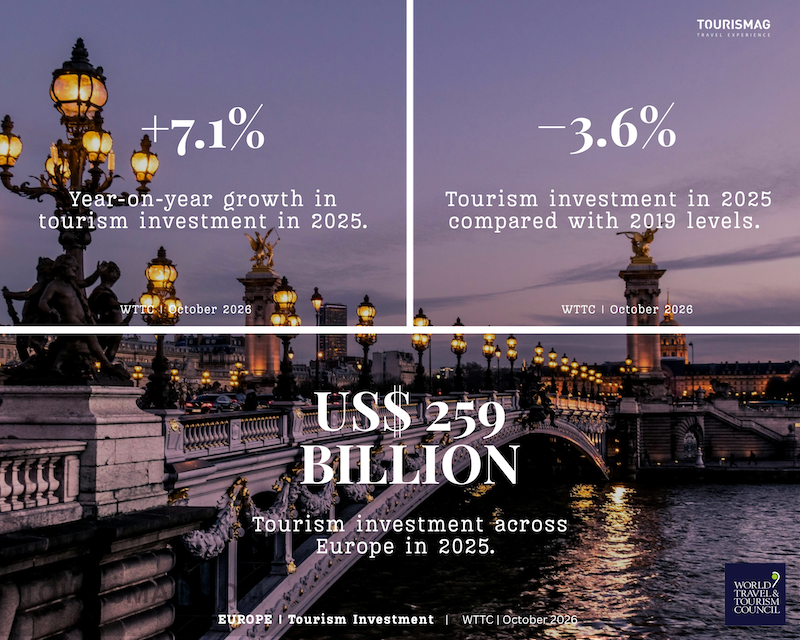
Tourism investment across Europe reached $259 billion in 2025, up 7.1% year on year, but still 3.6% below 2019 levels. WTTC’s report sets out eight priorities linking investment with easier travel, stronger destinations and long-term competitiveness.
These priorities work together. Marketing needs accessible transport and workable visa procedures. Hotels need skilled employees. Digital services need businesses capable of using them.
Investment decisions should therefore be judged by how well they strengthen the destination as a whole.
The Mediterranean makes adaptation an economic priority
Mediterranean destinations account for 52.2% of international visitor spending in Europe, according to WTTC, while facing significant exposure to heat and water stress. The organisation recommends investment in climate adaptation, water and waste management, and nature protection.
For investors and policymakers, these are questions of business continuity as well as environmental responsibility. A destination’s appeal depends on reliable services, functioning ecosystems and communities willing to welcome visitors.
WTTC also advocates planning that connects tourism with housing, mobility and local services, alongside a shift towards value-based targets.
Eight priorities to strengthen European tourism
WTTC’s roadmap identifies eight areas where policy and investment can strengthen Europe’s tourism competitiveness:
- Make travel easier and more secure: accelerate digital Schengen visas, improve access to multiple-entry visas and coordinate biometric border procedures.
- Diversify source markets: attract more visitors from beyond Europe through targeted promotion and easier visa access.
- Boost tourism investment: provide stable regulations, improve financing for SMEs and strengthen access to European investment instruments.
- Advance sustainable tourism: invest in climate adaptation, water efficiency, waste management, nature protection and lower-emission transport.
- Strengthen destination stewardship: integrate tourism with housing, mobility and public services, while spreading demand across locations and seasons.
- Attract and upskill talent: expand apprenticeships, support skills recognition and improve opportunities for young workers.
- Support AI adoption: help businesses, particularly SMEs, access training, expert advice and shared digital tools.
- Expand connectivity: improve air, rail, maritime and road connections, supported by integrated information, booking and ticketing.
That provides a useful test for Malta’s next chapter. Will the investment strengthen local suppliers? Develop careers? Improve resource efficiency? Support experiences that distinguish the destination?
Malta has secured a significant expression of investor confidence. The next achievement will be turning that confidence into projects whose value endures, for businesses, visitors and residents alike.