
Across the UAE, women are no longer simply participating in the economy. They are investing, planning, managing risk and shaping long-term decisions. For Dubai, one of the world’s most dynamic tourism destinations, this evolution offers a valuable insight into the traveller of tomorrow.
For years, the global narrative around financial decision-making has too often underestimated women’s role. In the UAE, recent data offers a sharper and more contemporary reading: women are not standing on the sidelines of the economy; they are helping shape it.
According to Ministry of Human Resources and Emiratisation data cited by eToro, women now hold around 1.039 million jobs in the UAE private sector, including more than 72,000 managerial and leadership roles. This is not a symbolic presence. It is a structural shift, with direct implications for income, investment, lifestyle choices and, ultimately, travel behaviour.
eToro’s latest UAE Retail Investor Beat, released in June 2026, does not claim to be a tourism study. It is first and foremost a financial survey. Yet for the travel industry, its findings offer a revealing portrait of a new generation of women in the UAE: independent, informed, long-term minded and highly attentive to stability.
Financial independence is the primary investment goal for 60% of women investors surveyed. Women are also more likely than men to hold investments over several years, with 47% taking a long-term approach compared with 43% of male investors. The survey also shows that 71% of women investors in the UAE have been investing for more than three years.
These figures matter beyond the financial sector. A woman who manages her savings, diversifies her portfolio and adjusts to market conditions is also likely to approach consumption, mobility and travel with the same degree of discernment. She is not just looking for a destination. She is looking for security, value, flexibility, quality and confidence.
A new economic profile, not a passing trend
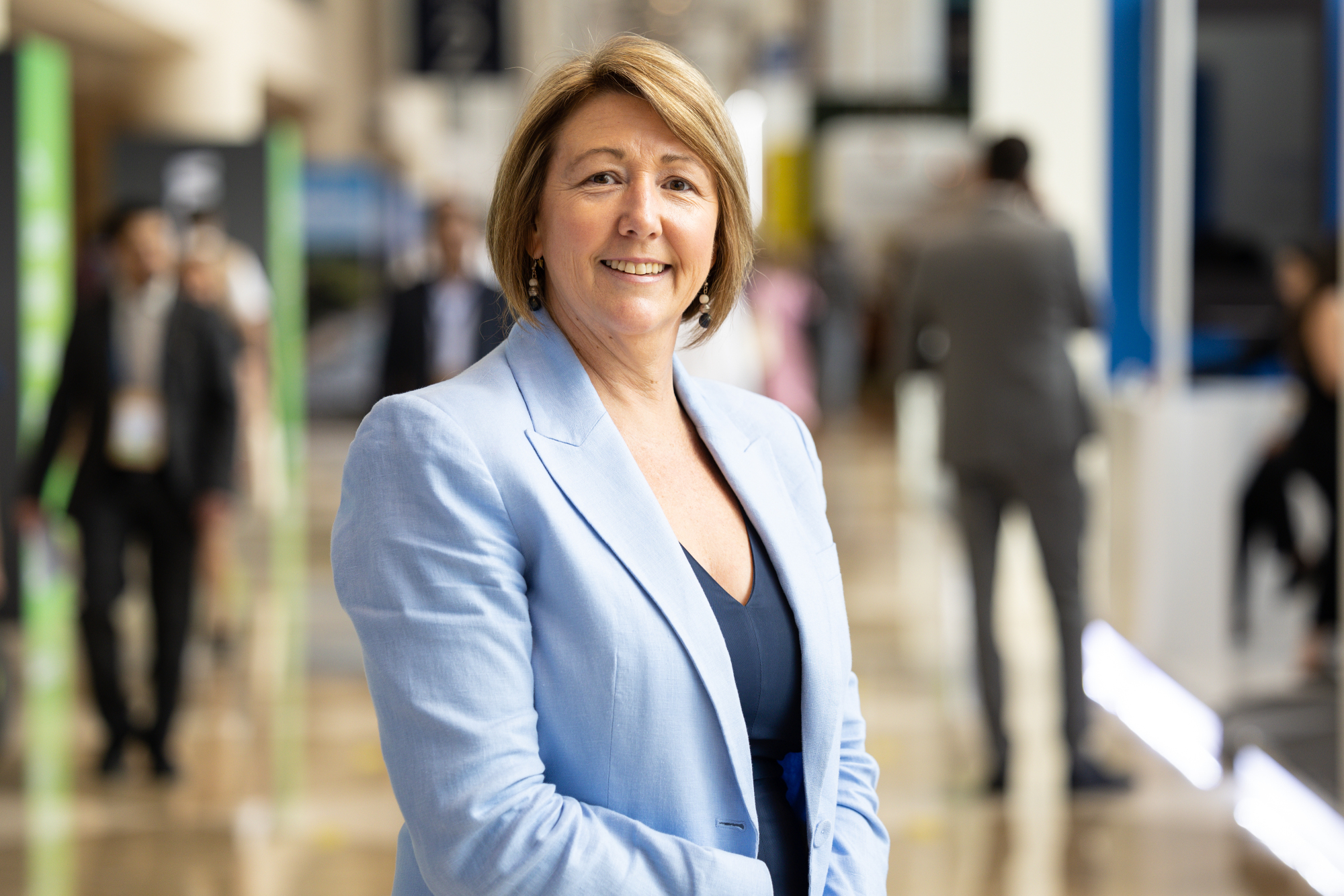
 Nagham Hassan, Market Analyst at eToro
Nagham Hassan, Market Analyst at eToro, makes the point clearly: the story is not that women are “catching up”. It is that old assumptions have failed to keep pace with the way women in the UAE are already building wealth in 2026.
This observation is important for tourism. The modern traveller can no longer be understood only through nationality, age or income bracket. Decision-making power, financial confidence, personal safety, lifestyle ambition and the ability to plan ahead are becoming equally important.
The eToro survey shows women investors in the UAE balancing caution with ambition. Savings accounts remain widely held, while exposure to shares, bonds and funds is also significant. Cash is present in 54% of women’s portfolios, commodities in 49%, and alternative investments such as real estate account for 46%.
For Dubai, this last figure is particularly relevant. The city has spent years building an ecosystem where tourism, residence, investment and lifestyle often overlap. Serviced apartments, branded residences, long-stay hospitality, premium districts, remote-work-friendly infrastructure and high-end urban experiences all speak to a traveller who does not separate comfort from value, or mobility from long-term planning.
Dubai’s tourism momentum gives the trend scale
The rise of financially autonomous women in the UAE comes at a moment when Dubai is consolidating its position as one of the strongest urban tourism brands in the world.
In 2025, the city welcomed 19.59 million international overnight visitors, up 5% year on year, marking a third consecutive record year. Its hospitality sector followed the same trajectory. By the end of 2025, Dubai had 827 hotel establishments and 154,264 rooms, with average occupancy reaching 80.7%.
These are not marginal figures. They point to a destination that has managed to combine volume, infrastructure, brand visibility and premium positioning.
Air connectivity remains another major advantage. Dubai International Airport - DXB - retained its position in 2025 as the world’s busiest airport for international passengers, reinforcing the emirate’s role as a global gateway between Europe, Asia, Africa and the Middle East.
For women travellers - whether residents, regional visitors, business travellers, solo travellers or groups of friends - accessibility is not just a logistical detail. It is part of the confidence equation. A destination that is easy to reach, easy to navigate and well served by hospitality infrastructure has a clear competitive edge.

The female traveller cannot be reduced to one segment
It would be too simplistic to suggest that the women investors described by eToro are automatically the same women booking holidays, long-stay residences or luxury escapes in Dubai. The survey does not measure travel behaviour directly. That distinction matters.
But it does reveal a broader social and economic context: women in the UAE are gaining influence over money, priorities and long-term decisions. In tourism terms, this means they should not be treated as a secondary audience or an add-on to family travel. They are decision-makers in their own right.
This interpretation is also supported by wider global travel trends. Mabrian and The Data Appeal Company have estimated that solo female travellers already account for 14% of global female tourism demand. Their analysis highlights safety, diversity of experiences and seasonality as decisive factors in destination choice.
Dubai has already benefited from this perception. In a 2025 ranking by InsureMyTrip, the city was named the leading destination for solo female travellers among 62 cities analysed, with an overall score of 7.71 out of 10. This should be read carefully: rankings evolve, methodologies differ, and no index can capture the full complexity of women’s travel. Still, it remains a useful indicator of how Dubai is perceived in terms of safety, urban comfort and ease of movement.
Safety, confidence and lifestyle as destination assets
Safety has become one of the strongest currencies in tourism. For women, it is often not a secondary concern but a central factor in choosing a destination, accommodation, neighbourhood, transport option and even itinerary.
Dubai’s appeal lies partly in its ability to combine visibility, infrastructure and predictability. Its hotel offer is extensive, its urban services are highly organised, and its destination branding is built around both aspiration and control. This makes the city especially well positioned for travellers who want experiences without uncertainty.
But the point is not only safety. The more relevant question is how destinations respond to women who are financially independent, globally aware and experience-driven. These travellers are not looking for patronising campaigns. They are looking for intelligent services: flexible booking, transparent pricing, wellness and cultural experiences, high-quality public spaces, trusted mobility, privacy when needed, and a sense of control over their journey.
Geopolitical awareness and the search for stable destinations
The eToro survey also shows that women investors in the UAE are closely attuned to global and regional developments. Some 77% believe geopolitical tensions can affect their investment portfolios, while 48% plan to adjust their positions in response.
This risk awareness is highly relevant to travel. In an uncertain world, destinations that are perceived as stable, connected and operationally reliable become more attractive. Travellers may still want discovery, but they increasingly expect reassurance.
Dubai’s tourism performance suggests that the city has, so far, been able to maintain this balance. Its 2025 record year was achieved in a regional and global environment marked by geopolitical tensions, shifting air routes and changing consumer confidence. That resilience strengthens its credibility as both a leisure destination and a business hub.
What the tourism industry should understand
The lesson for the tourism sector is clear: women in the UAE are not only earning, investing and planning. They are also helping redefine what confidence looks like in a destination.
For Dubai, the opportunity is not to market itself to women through clichés, but to recognise the sophistication of this audience. Financial autonomy often goes hand in hand with higher expectations: better service, clearer information, safer mobility, richer experiences, more personalisation and stronger value.
Tourism brands, hotels, airlines and destination marketers should therefore look beyond the traditional language of luxury or escape. The emerging female traveller - whether solo, professional, resident, regional or international - is not necessarily asking for more spectacle. She is asking for relevance.
In that sense, the eToro findings are not just a financial snapshot. They are a signal. As women in the UAE grow their wealth, manage their futures and define their own priorities, they are also reshaping the way destinations should think about demand.
Dubai, with its record visitor numbers, global connectivity and mature hospitality ecosystem, is well placed to respond. But the message extends far beyond one city: the tourism industry that understands women as decision-makers, not as a niche, will be better prepared for the next chapter of travel.
Sources: eToro UAE Retail Investor Beat, June 2026; Ministry of Human Resources and Emiratisation data cited by eToro; Dubai Department of Economy and Tourism; Airports Council International; Mabrian and The Data Appeal Company; InsureMyTrip 2025 Solo Female Travel ranking.