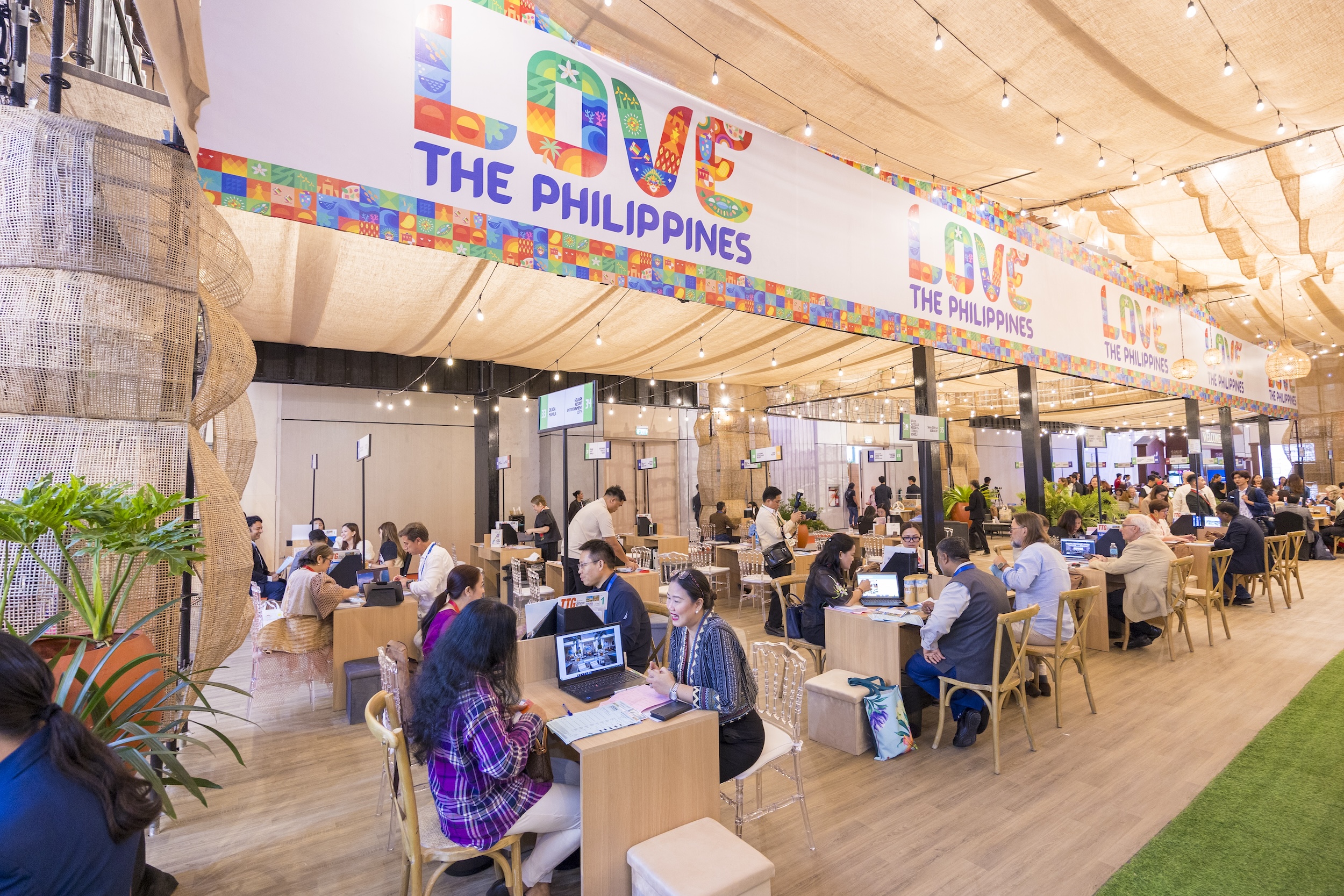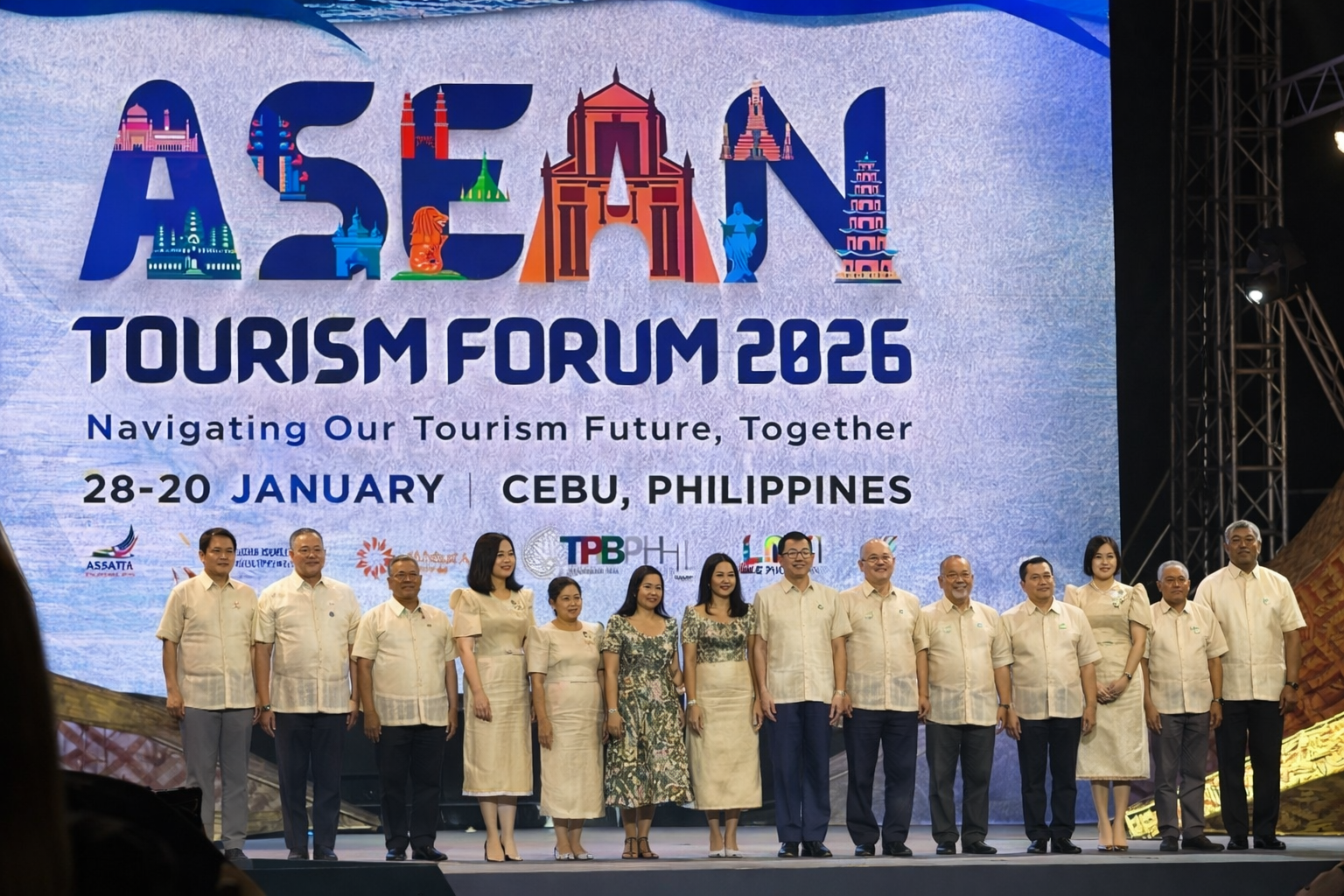

At the ASEAN Tourism Forum (ATF) 2026, held from 26 to 30 January, Southeast Asia’s tourism leaders gathered at a decisive moment for the region’s recovery. Under the banner “Navigating Our Tourism Future, Together,” ministers and industry executives focused on resilience, sustainability and sharper regional competitiveness.
The numbers tell a story of momentum. In 2024, ASEAN welcomed 127.2 million international visitors | a 24.7 percent jump from the previous year. Confidence is returning. Airlines are rebuilding capacity. Investors are watching closely. But in Cebu, the conversation moved beyond recovery toward reinvention.
Among the most forward-looking delegations was Singapore.
A Digital Backbone for the Visitor Journey
Speaking at the TRAVEX media briefing, Su Min Kwan of the Singapore Tourism Board outlined how the city-state is embedding digital infrastructure across every layer of its tourism ecosystem.
Technology is not an overlay — it is foundational,
she emphasised, describing how Singapore is systematically integrating data, connectivity and intelligent systems to streamline the visitor journey.

From trip planning to arrival and on-ground experiences, Singapore is tightening integration across transport, ticketing, payments and crowd management. Cashless systems are standard. Digital ticketing is seamless. Data analytics support real-time mobility management in high-traffic precincts.
The goal is not to showcase technology for its own sake. It is to remove friction.
Singapore’s compact urban design, long considered a competitive advantage becomes even more powerful when paired with intelligent transport systems and high-speed connectivity. For time-sensitive travellers and business delegates, efficiency is part of the luxury proposition.
Reinventing the Familiar

Singapore is also reimagining its most recognisable assets.
At Marina Bay Sands, immersive technologies are reshaping how visitors engage with exhibitions and entertainment. Gardens by the Bay continues to blend environmental storytelling with digital interactivity. On Sentosa, experiential upgrades strengthen the island’s leisure appeal, while Mandai’s transformation into an integrated wildlife and nature precinct introduces sustainability-focused design and smart environmental systems.
The thread connecting these projects is deliberate: innovation must enhance experience, not overshadow it.
Sustainability is embedded into this strategy. Energy-efficient architecture, green building standards and data-led resource management are no longer optional — they are baseline expectations, especially as ASEAN destinations align more closely around shared green tourism frameworks.
Doubling Down on MICE
If leisure travel is recovering, business events are evolving.
Singapore’s MICE sector, long one of its strongest pillars, is being recalibrated for a hybrid era. Venues such as Singapore EXPO and Suntec Singapore Convention and Exhibition Centre are equipped with high-speed digital infrastructure and flexible event configurations designed for both in-person and remote participation.
The city-state is positioning itself not just as a host of global congresses, but as a testing ground for next-generation event formats. In a landscape where physical presence must integrate seamlessly with digital reach, technological readiness becomes a competitive differentiator.
This aligns with a broader strategy: prioritising high-value segments and sustainable long-term growth over pure volume.
Looking Ahead to 2027
Singapore announced it will host the ASEAN Tourism Forum 2027, marking its return as host after a decade. The event will coincide with ASEAN’s 60th anniversary, providing a symbolic platform to reflect on six decades of regional cooperation while charting the next chapter of integrated tourism development.
As both ASEAN Chair and ASEAN Tourism Chair in 2027, Singapore is expected to steer conversations on sustainability, digital transformation and deeper regional connectivity.
For fast-growing outbound markets such as India and other long-haul segments, Singapore is refining its positioning: smart, connected, efficient, yet culturally layered and lifestyle-driven.
At ATF 2026, the message from Singapore was clear. Recovery is only the starting point. The future of tourism in Southeast Asia will belong to destinations that combine technological intelligence with experiential depth and that see innovation not as spectacle, but as infrastructure.